Most persuasion announces itself. The pitch, the close, the call to action: you can feel it coming, and the moment you feel it coming, part of you starts resisting it. Covert persuasion is the other kind. My name is Chris Michael, and reading and moving people is what I do for a living, on stage as a mentalist and in training rooms with government agencies, Fortune 500 companies, and sales teams. Covert persuasion is the discipline underneath all of that work. It is influence that operates below the other person's conscious awareness, and it does not aim at the reasoning brain at all. It aims at the limbic system, the older emotional machinery that decides how you feel about something before you have consciously finished perceiving it. Get that system to produce comfort and trust, or get it to produce urgency, and the action you want tends to follow on its own. The argument arrives later, supplied by the other person, to explain a decision that was already made. That is the whole field in three sentences. The rest of this piece is how it actually works, what the intelligence world has written down about it, and where you can watch it happen in plain sight.
Section 01 / The engineWhy covert persuasion targets the limbic system
The limbic system is the part of the brain that runs threat detection, emotional tagging, and the fast judgments that keep an organism alive. It works ahead of conscious thought and it does not negotiate. Before the thinking brain has processed a single word of your proposal, the limbic system has already answered its own questions: am I safe with this person, do I have time, what do I stand to lose. I have written about this machinery before in What You Need to Know About the Brain, and the punchline is the same here. The honest brain decides emotionally first and explains rationally second.
Covert persuasion is, at the mechanical level, the deliberate management of that system's two big levers.
- Lever one: comfort and trust. Downshift the threat response. Familiarity, rapport, mirroring, unhurried pacing, giving before asking. When the limbic system reads "safe," people disclose more, agree more, and stop auditing you. Nearly every elicitation technique taught in the intelligence world is a comfort play: people tell secrets to people who feel like home.
- Lever two: urgency and fear. Upshift arousal. Scarcity, deadlines, the prospect of loss. The limbic system weighs losing something roughly twice as heavily as gaining the same thing, so the fear of a closing window compresses deliberation and forces a decision now. Some practitioners lean on fear hard. It works, which is exactly why it deserves the ethics test at the end of this piece.
Notice what both levers have in common. Neither one is about the merits. Both are about producing a state, because the state produces the action. Comfort opens the door; urgency pushes someone through it. Every technique that follows, from CIA recruitment doctrine to a closing line in a conference room, is some arrangement of those two levers pointed at one outcome: action taken.
The state produces the action. The reasons arrive afterward.
Section 02 / The tradecraftWhat the CIA's own documents say
If you want proof that covert persuasion is a real, documented discipline and not an internet myth, you do not need leaked files. The interesting material has been declassified, and some of it is sitting on the CIA's own website.
Start with recruitment. For decades, case officers were taught a framework called MICE: Money, Ideology, Compromise, Ego, the four classic reasons a person betrays their own side. Then in 2013, the CIA's in-house journal Studies in Intelligence published an unclassified paper by Randy Burkett titled An Alternative Framework for Agent Recruitment: From MICE to RASCLS. The argument is remarkable for how openly it is made. Burkett proposes that officers should think less about leverage and more about the psychology of influence: Reciprocation, Authority, Scarcity, Commitment and consistency, Liking, Social proof. If that list sounds familiar, it should. It is the same set of principles behavioral science identified in sales and marketing, adopted by an intelligence service for the highest-stakes persuasion problem that exists: convincing a stranger to commit espionage. When the agency that recruits spies and the team that closes enterprise deals converge on the same six mechanisms, that is not coincidence. That is what the limbic system responds to.
Now go back further. In 1944, the OSS, the CIA's wartime predecessor, issued the Simple Sabotage Field Manual, declassified decades later and now featured on the CIA's own site. Most people remember it for the physical sabotage. The fascinating part is the section on sabotaging organizations through pure behavior: insist everything go through channels, refer every decision to a committee, relitigate decisions that were already made, haggle over precise wording. No explosives, just the deliberate production of friction and doubt. It is covert persuasion run in reverse: instead of moving people to action, you quietly engineer inaction, and nobody in the building can point to the cause. The manual matters because it shows an intelligence service treating ordinary human behavior as an operational system with levers, eighty years before anyone said the words "behavioral science" in a boardroom.
One more, for the defensive side: Richards Heuer's Psychology of Intelligence Analysis, written for CIA analysts and published openly. Heuer's core warning is that perception is theory-driven: we see what we expect to see, and first impressions resist contrary evidence. Persuaders exploit exactly that. Set the expectation early, and the other person's own perception does the maintenance work for you. Heuer wrote the book to protect analysts from being fooled. Read as a practitioner, it is also a manual for how the fooling works.
And the day-to-day craft that sits under all of it is elicitation: getting information and agreement from a person who never realizes they are being guided. The techniques are taught across the intelligence and counterintelligence world and they are almost embarrassingly simple. State something slightly wrong and let the other person correct you, because correcting feels like winning and winning feels safe. Offer a confidence to receive one, because reciprocity applies to secrets just like favors. Underestimate someone out loud and let their ego volunteer what your questions never could. Every one of those plays is lever one at work. Nobody discloses under interrogation lighting. People disclose when the room feels warm.
Section 03 / The screening roomWatch it happen in Suits
If you want to see covert persuasion demonstrated at television speed, watch Suits. The legal plots are fiction, but the influence mechanics Harvey Specter runs are textbook, which is a large part of why the character reads as powerful rather than merely loud. His own line is the thesis of this entire article: "I don't play the odds, I play the man."
Watch what he actually does, scene to scene. He anchors outrageously early, so every later number feels like a concession even when it is exactly what he wanted, and he sets terms before the other side knows the negotiation has started. He manufactures scarcity constantly: the offer that expires when he walks out of the room, the meeting he ends first, the deal that is suddenly unavailable. That is lever two, urgency, applied with a clock instead of a threat. And underneath all of it he is running a relentless status display: the unhurried pace, the refusal to flinch, the immaculate environment. None of that is decoration. Composure is a limbic signal. The nervous system across the table reads "this man is not afraid" and quietly concludes it should be, or that it is safest standing next to him. Meanwhile Donna runs the other lever entirely: rapport, memory for personal detail, the comfort that gets people talking before they realize what they have said. One character drives urgency, the other manufactures trust, and between them the firm wins scenes the law alone never would.
Why it works on screen. The audience's limbic system processes those scenes the same way the characters' do. You feel Harvey's status play and Donna's warmth from your couch. The writers are not teaching influence theory; they are exploiting the fact that the mechanics are real enough to land through a screen.
Section 04 / The applicationThe techniques that actually move people
Strip the tradecraft and the television out, and the working core of covert persuasion comes down to a short list. These are the techniques I see produce real movement, in rooms where the outcome matters.
- Set the state before the substance. The room, the pace, the first ninety seconds. Decide which lever the situation needs, comfort or urgency, and build it before a single point of substance is raised. Most people start persuading at the agenda. The agenda is too late.
- Anchor first. The first number or position becomes the gravitational center of everything that follows. If you did not set the anchor, you are negotiating inside someone else's frame.
- Give before you ask. Reciprocity runs below conscious choice, and it compounds. Information, concessions, genuine help: the debt accumulates whether or not anyone names it.
- Frame loss, not gain. The limbic system fears losing what it has more than it wants what it lacks. "Here is what this protects" outperforms "here is what this adds" almost everywhere it is tried.
- Let them say it. Commitment and consistency mean a position someone states out loud becomes part of their identity. Ask the question whose honest answer is your argument, then stop talking. A conclusion a person reaches themselves is one they will defend for you.
- Presuppose the decision. "Do we start with the small rollout or the full one?" is a structurally different question from "do you want to do this?" Both are honest. Only one of them frames action as already underway.
What separates a practitioner from someone reciting this list is calibration: reading the live feedback from the other person's face, hands, and breathing, and adjusting in real time. That is where my years as a working mentalist matter more than any book. Reading people live, under pressure, in front of audiences actively trying to catch the method, builds a perceptual resolution you cannot get any other way. The techniques tell you what to deploy. The read tells you when, how hard, and when to stop.
Section 05 / The lineThe ethics test
Everything above is a set of tools, and tools do not come with intent installed. The same mechanics that calm a frightened patient into accepting treatment will pressure a retiree into a bad annuity. So here is the test I teach in every training room, and it has not failed me yet. Before you apply any of this, ask: if the other person could see exactly what I am doing and why, would they feel served or cornered? If the answer is served, proceed. If the answer is cornered, you are not persuading anymore, and you should stop. Fear especially. Urgency built on a real deadline is influence; urgency manufactured from a fake one is just a con with better vocabulary. The practitioners who last are the ones who use these tools to serve the relationship, not just the transaction.
Routing / if you want to work on this
I teach covert persuasion, influence, elicitation, and nonverbal communication to sales teams, executives, and leaders through Decode Behavior corporate training, and I deliver keynotes on the same material, including Signals of Deception and Framed to Win. Keynotes start at $15,000; training engagements are custom-scoped.
Reach me at chris@bookchrismichael.com, or read more about the full range of work on the about page.
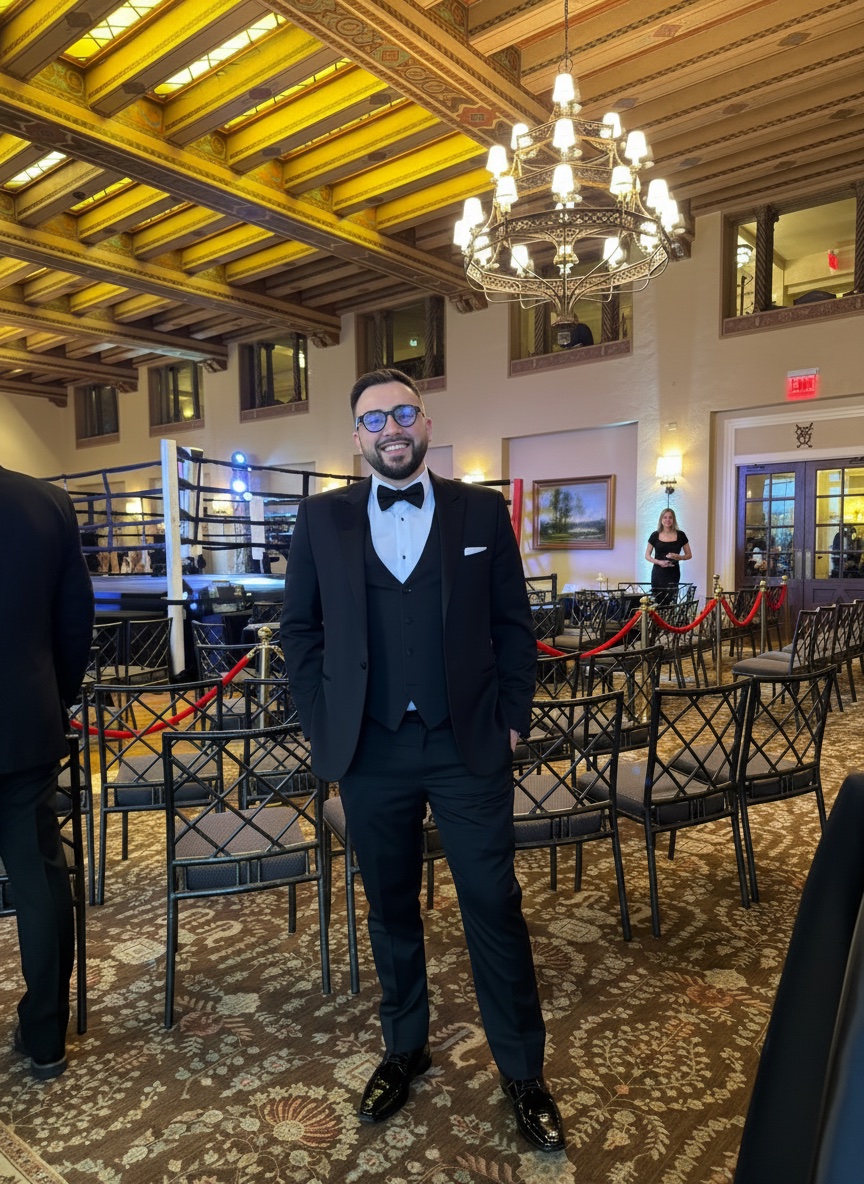
About the author
Chris Michael is a body language expert, mentalist, and magic consultant, founder of Decode Behavior and a trainer for the Body Language Academy by Joe Navarro. A Certified Body Language Master Trainer who was trained by a founding member of the FBI's Behavioral Analysis Program, he teaches deception detection, persuasion, and influence to government agencies, Fortune 500 companies, and sales teams, and he has spent years reading people live on stage.
Full dossier: chrismichael.site/about.html · Watch the work: YouTube